
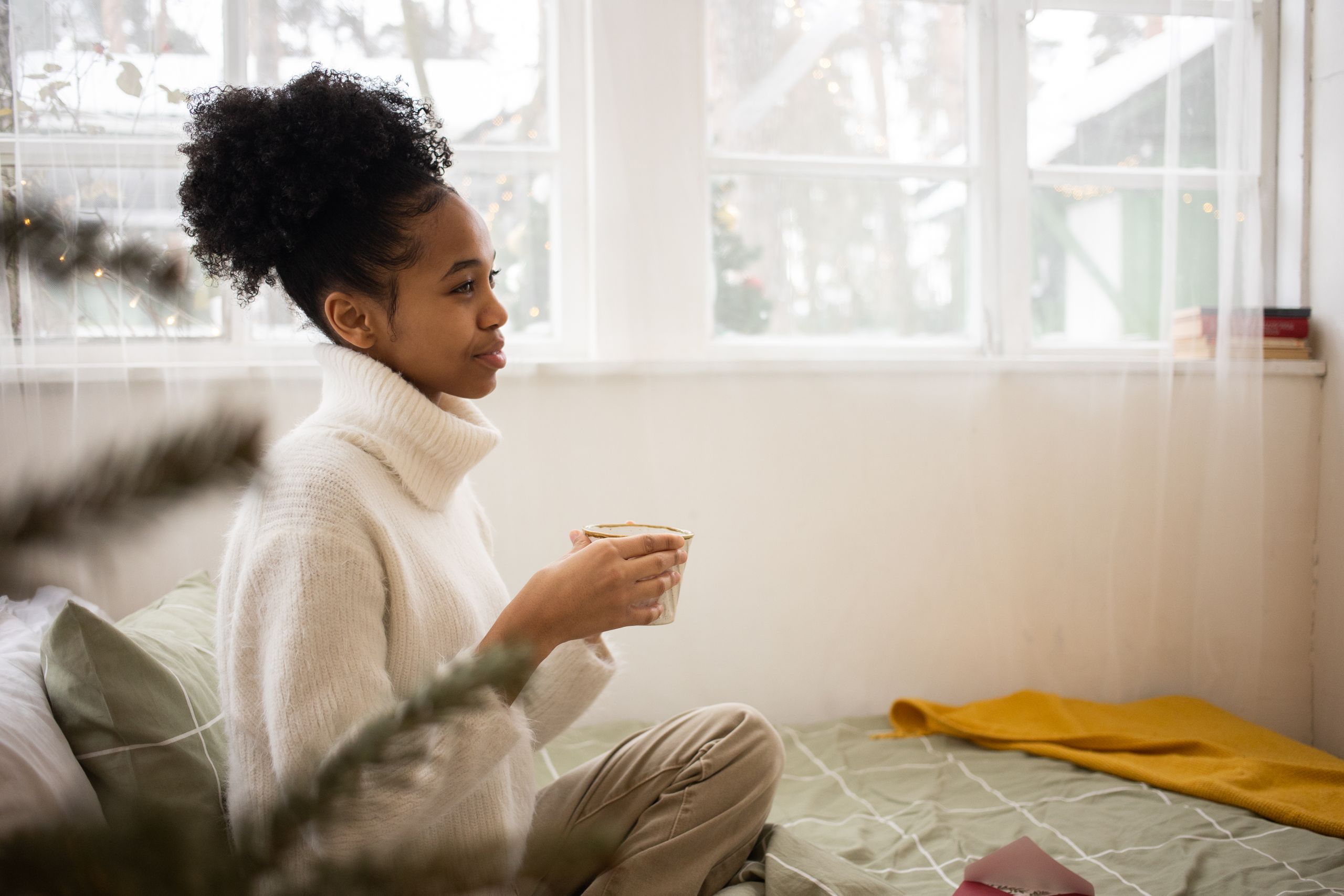
The house is silent. The wind pushes against the outside walls as I curl up on the couch with my herbal tea. Outside it’s dark, snow mixed with rain pattering the window and the grass. All I can think of is that I’m inside; I’m safe from the cold. I feel cozy and peaceful, which makes me happy. As much as I wish every night could be this peaceful, winter isn’t always like this. For many of us, myself included, the colder months bring more than just cozy evenings; they bring feelings of isolation and struggle. The quiet that feels comforting at first can become a heavy blanket. I wanted to find out more about this, and put words and facts to why this is a reality for so many people like me.
To gain insight, I reached out to Emerald “Fitz” Anderson-Fitzpatrick, a Licensed Mental Health Counselor Associate who specializes in LGBTQ+ issues, Nuerodiverse mental health, Trauma and Transpersonal issues. Fitz was the perfect person to help shed some light on this topic, since they have a deeply personal connection to winter mental health. They help clients navigate this difficult time every year. We discussed strategies for staying mentally healthy.
In asking about why this time can be so hard for people, Fitz pointed to something I hadn’t heard of before which is Seasonal Affective Disorder, (SAD). Fitz explained, “Seasonal Affective Disorder is most likely to happen in the winter because we plunge into darkness. I personally blame daylight savings, because that takes away an hour of daylight, which really does affect us as human beings. The holiday season can be a time of trauma. So the holiday season is much more likely to activate PTSD. I’ve noticed for me and my caseload, that’s really true. I think something else that makes the holiday season really hard is this sense of obligatory cheer. It’s the one time of year where everyone is expected to be happy and everything is like, literally, really dark, which is really difficult. So I think that that can create feelings of loneliness and isolation.” Those feelings don’t automatically go away after the Holiday season. Here are some simple ways to stay connected, keep moving and stay mentally healthy these darker months.
Easy Self Care Practices
As the weather gets colder I’ve found it more and more difficult to get out of the house. Gym membership? Forget it, it’s freezing. Staying inside almost always sounds better. This resonated with Fitz, who shared, “Because it’s darker and colder, people have a tendency to cuddle up inside, but getting out and getting movement is key.” They suggested simple ways to get out and incorporate movement that sounded much better to me than trudging through the snow and ice. For example, walking laps at the mall with loved ones, or exploring large stores, like your local Target. It’s bright and there’s so many lovely things to look at. It’s also fun to see other faces which is great for lifting our perspective, as well as getting our steps in.
On the other hand, it’s also important to recognize your body’s need to slow down. “Our brains evolved for the seasons. Our agricultural ancestors were planting and harvesting through the warmer months and then they would stop during the winter months. Many of us can’t afford to stop working, but we need to give ourselves a break and lower our expectations of ourselves in the winter, especially if you deal with depression. Don’t expect yourself to be as productive.” Fitz added.
Sleep and Vitamin D – Deficiency & Sleep Tips
Getting good sleep is just as important for our mental health as other daily habits. It’s easy to overlook, but sleep plays a huge role in how we feel and function, especially during the winter months. Poor sleep can make us more anxious, irritable, and less able to handle stress. Creating a nighttime routine that feels comforting and relaxing can make a real difference. Dim the lights, sip a calming tea, or put away screens an hour before bed to help signal to your body that it’s time to rest. The best part of this, in my opinion, is that you can set nightly traditions around this. My personal favorite is reading nerdy articles right before bed. I have a whole stash of brainy books and magazines in my home-library. I put on my favorite frumpy jam-jams, light a candle and pick whichever random topic I’m feeling that night. Paleoanthropology? You got it. Planetary geology? Sing me to sleep! Life feels noticeably better when I get good sleep compared to when my sleep is poor. If you’re struggling with sleep, talking to your doctor or exploring options like guided meditations or sleep-friendly apps can be good places to start.

I’ve often heard that taking Vitamin D is helpful during the winter months, but it’s not as simple as just “get outside” or start taking supplements. Before adding a Vitamin D supplement to your routine, it’s important to know if you actually have a deficiency. Fitz pointed this out, saying, “What I recommend people do is talk to their doctors about getting tested for a deficiency.” This way, you can be sure you’re meeting your body’s specific needs. It’s also important to choose an FDA-approved supplement, as not all supplements on the market are checked for safety and quality.
Social Connections – Find Your People
Supportive relationships are everything. The other day, I went to a drive-thru café and had a nice chat with the barista for several minutes. It wasn’t until I glanced in the mirror that I realized I had a huge piece of chocolate stuck between my two front teeth. Mortified, I quickly cleaned my teeth when the barista wasn’t looking, paid for my drink (tipped VERY generously), then tried to make my exit. In my hurry to escape, I turned the wheel too sharply and drove up on the curb and onto the grass right by the barista’s window—with a long line of cars behind me as witnesses. Am I the only one who does this? Maybe. Telling my best friend this story later had us laughing until we cried. It reminded me of how important it is to have those supportive, unconditional relationships in life that give your perspective and feel understood.

Not all close friendships or family members live close by, and that’s why it can be so important to have regular conversations on Zoom or FaceTime. Don’t let distance be a hindrance to close, meaningful relationships that feed your soul. Especially in the months where it feels hard to get out of the house. Sometimes we need help with motivation, and that’s where Digital Body Doubling comes in. “That’s when you get on Zoom or FaceTime with a friend, and you do the things that you don’t really want that need to get done but you don’t really want to do, and you do those things together. I’ve been doing it a lot with my best friend, and it’s been helping me get through a really big project that I’m working on, that I’m really excited about but would not have the regular motivation to do. So I feel good because I’m getting stuff done, and I feel good because I had some social connection that was really low key.” Fitz shared.

Talk It Out – Go to therapy!
Therapy has always been a huge help in my life. Having someone that’s on your side and rooting for you; a safe person that you can talk with has given me so much mental clarity. For me personally, it’s been a huge confidence builder. Having a therapist or other licensed professional to talk with is my last point on the list. I loved what Fitz had to say on the topic, “Even if you feel like your mental health isn’t that bad, or other people have it worse, just give yourself the big band aid and go to therapy if you can afford it; if your insurance covers it. You know, do the thing and go to therapy– there’s no reason to not if you feel like you could benefit from it. Just go. You know therapists, as much as we love doing the big, deep, dark work, we love doing more positive work with people too, and helping you embrace joy in your life, and helping you find your strengths. There’s a lot of reasons to go to therapy, and I can’t think of very many reasons to not go.”
Keeping your mental health as a top priority is really important as the cold months stretch on. Focusing on movement, connection, and finding support are some creative ways to do that this winter season. You are never alone, and we will make it through winter together.